
The Foundation Of The Connecticut River Valley

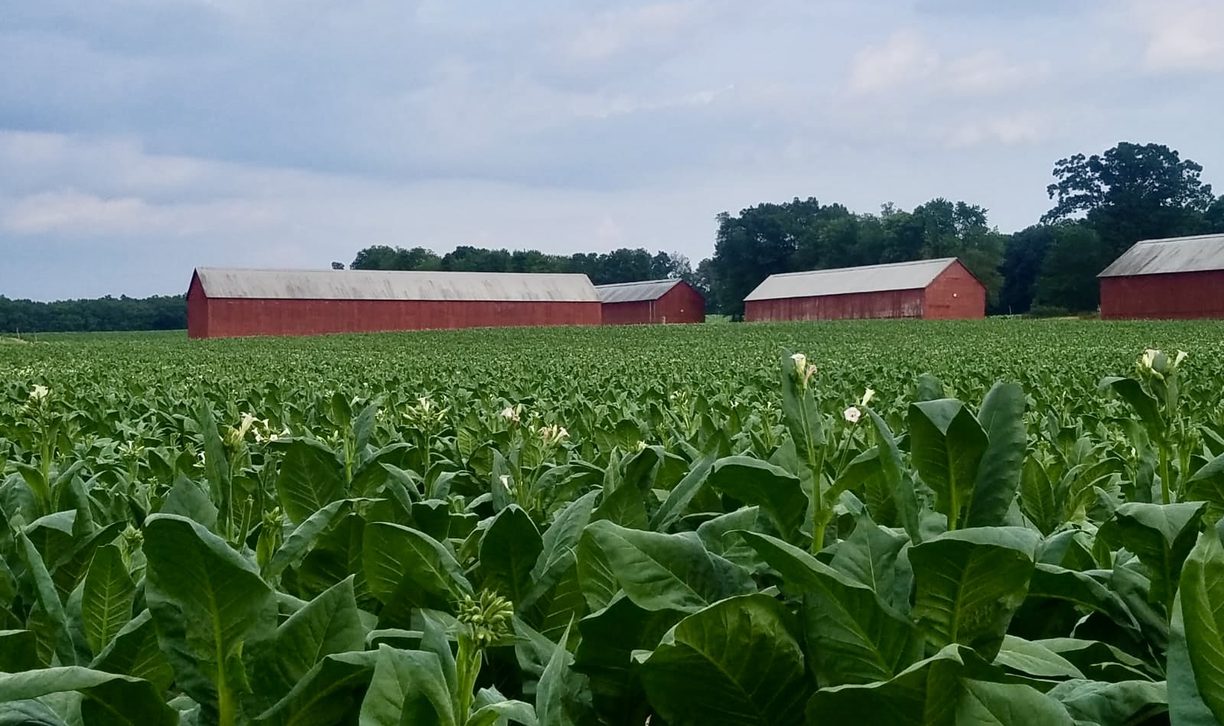
The Connecticut River Valley
When most people think of the state of Connecticut, they rarely think of it as producing some of the best and most respected cigar tobacco in the world. If you are a cigar smoker, you might have seen the word CT Shade or CT Broadleaf on cigar bands, boxes, or in tobacco shops. Still, most don’t realize the deep and rich history of the Connecticut River Valley that rivals that of Cuba. Before 1959, Cuba and Connecticut had a long history of trading cigar tobacco. Cigars produced in Cuba would use Connecticut seeds, and cigars manufactured in Connecticut would use Cuban filler tobaccos. To this day, Havana Seed is grown in the CT River Valley, and Cubans use hybridized varieties of seed called US Type 61, aka CT Shade.
I grew up on Connecticut tobacco lore from my grandfathers, who smoked CT Valley cigars for as long as I could remember. Their fathers smoked cigars manufactured in factories in New Haven, Bridgeport, and Hartford. CT lays claim to the oldest cigar factory in the New World, in Suffield. I did not fully realize the importance of Connecticut tobaccos in the world of cigars until I moved to Estelí, Nicaragua, in 2003. I was 24 years old and found myself among some of the greatest cigar makers in the world. Most were Cuban artisans who fled Cuba in the 1960s after Fidel Castro had nationalized the tobacco fields and factories. These Cuban master blenders departed Havana looking for similar climates and soils to grow dark air-cured tobaccos, aka cigar tobaccos. Nicaragua, also known as the land of lakes and volcanoes, became many Cuban cigar makers’ new home. The fertile, rich volcanic valleys of Estelí and Jalapa mimic those of Vuelta Abajo and Pinar del Río, yet are unique in their own right.
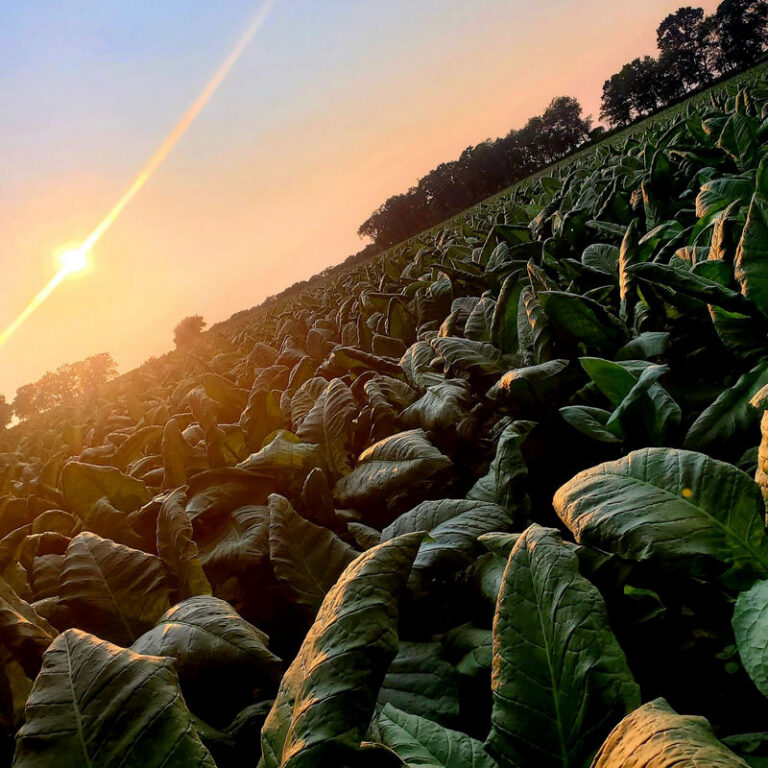
As I began my career running a cigar factory in Nicaragua, the Cubans would ask me, “De dónde eres?” Where are you from? “Soy de Connecticut,” I would reply, and their eyes would light up!
I witnessed a tremendous amount of respect for this strange word, “Connecticut,” that was so familiar to me. The word “Connecticut” derives from the Mohegan-Pequot word “Quinnehtukqut,” meaning the “long tidal river.” The CT River begins near the border of New Hampshire, flowing southward 406 miles through four states before emptying into the Long Island Sound. Fifteen thousand years ago, a large ice sheet covered most of this watershed terrain and eventually melted into a gigantic glacial finger lake known as Lake Hitchcock. After 3,000 years, Lake Hitchcock began to erode, causing it to drain into the Long Island Sound and eventually transform into the Connecticut River. In this lengthy process, the sandy loam of the lakebed settled on 30,000 acres north of Hartford, known today as the CT River Valley.
It is because of this river that Connecticut tobacco is so unique. Most cigar tobacco-growing regions are volcanic, but Connecticut’s sandy loam soil, created by the Laurentide Ice Sheet, left far fewer rocks than in other areas of New England. On average, the CT River Valley has 33 inches of this topsoil.
As a result, perfect amounts of silt and clay permit excellent drainage and air circulation around the roots of the plants, causing them to run deep before hitting clay. Stable roots make for a strong and healthy plant and cause the tobacco to be naturally sweet and earthy, with flavors unlike any other growing region in the world.
It is unclear exactly how long Indigenous communities had grown tobacco in Connecticut. Scholars have generally accepted that tobacco use dates back some 5,000 years, but discoveries in recent years in the mudflats of the Great Salt Lake Desert in Utah suggest that humans’ tobacco use began 9,000 years earlier than previously thought. Most Indigenous communities used a strain of tobacco called Nicotiana rustica, a much more potent plant than the tobacco used today in cigars, containing three to four times the amount of nicotine. This tobacco would cause the user to experience a psychoactive effect in which the shaman could communicate with the spirit world. As time went on and Europeans arrived in the Americas, less potent strains of Nicotiana rustica and Nicotiana tabacum began to grow and hybridize because they were more palatable and sweeter after fermentation.
In the early 1600s, a Dutch explorer named Adrian Block was the first European to travel up the Connecticut River and began trading tobacco with local tribes. Then, in 1640, the English arrived in Windsor, CT, and started growing tobacco in greater quantities after recognizing the fertile soils of the river valley. Due to trade among sailors and early merchants, many settlers brought Cuban, West Indian, and Virginia seeds. These varieties started to hybridize with local varieties, known as Poke or Ottomauch, because they were not as strong or bitter, making them more favorable among colonists.
Over the next 100-plus years, the cash crop of tobacco began to grow significantly. Cigars were peddled via wagons and produced mainly on homesteads and farms throughout the valley. Then, in 1810, the first factory was established in Suffield. By 1833, the Connecticut Broadleaf variety emerged and changed the world of cigars to this day. Broadleaf is known for its substantial-sized silky leaves, incredibly earthy, and naturally sweet flavor. It is also one of the most complex and challenging tobaccos to grow and ferment. Through my research, the origins of the Broadleaf seed are not precisely clear. Many sources state a Maryland seed was brought to Connecticut and hybridized with local strains. However, different books say it has a Bahamian origin. Regardless, it is now considered one of the five main varieties from which all the other seed varieties come. The five are Mata Fina (Brazil), Sumatra, San Andrés Negro (Mexico), Habanesis (Cuba), and CT Broadleaf.
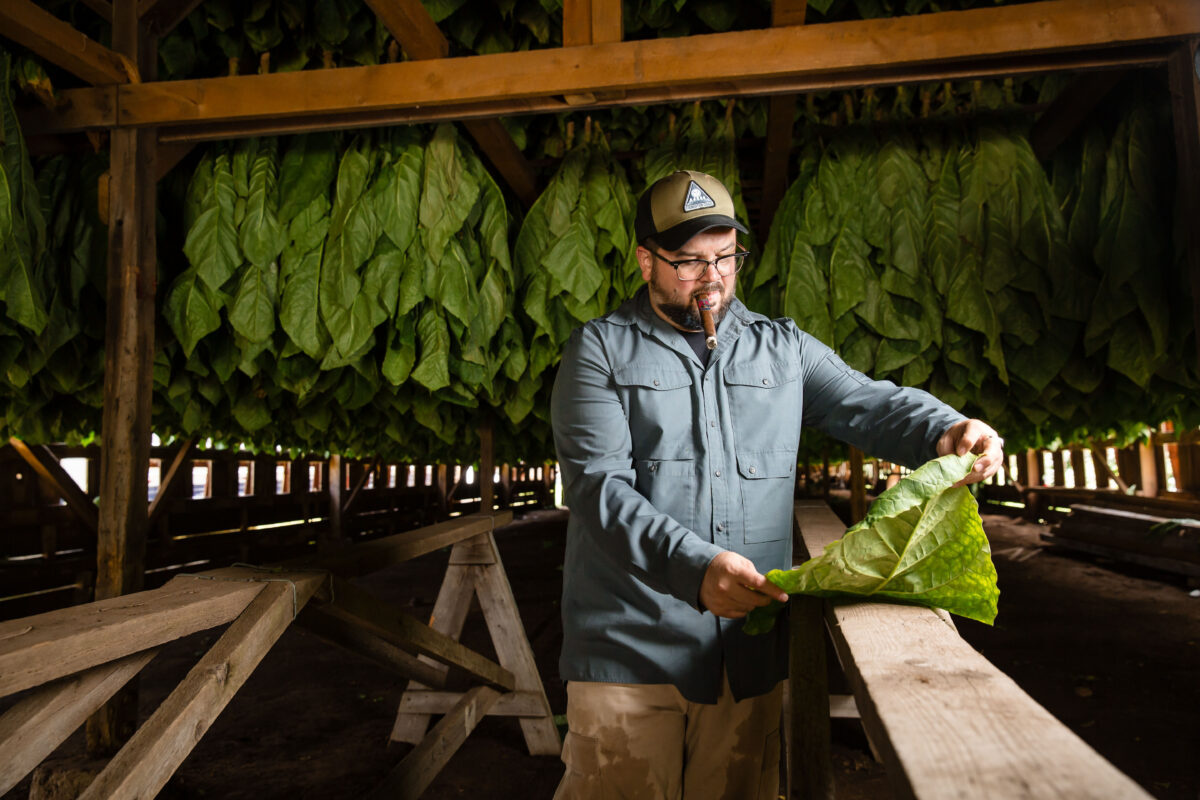
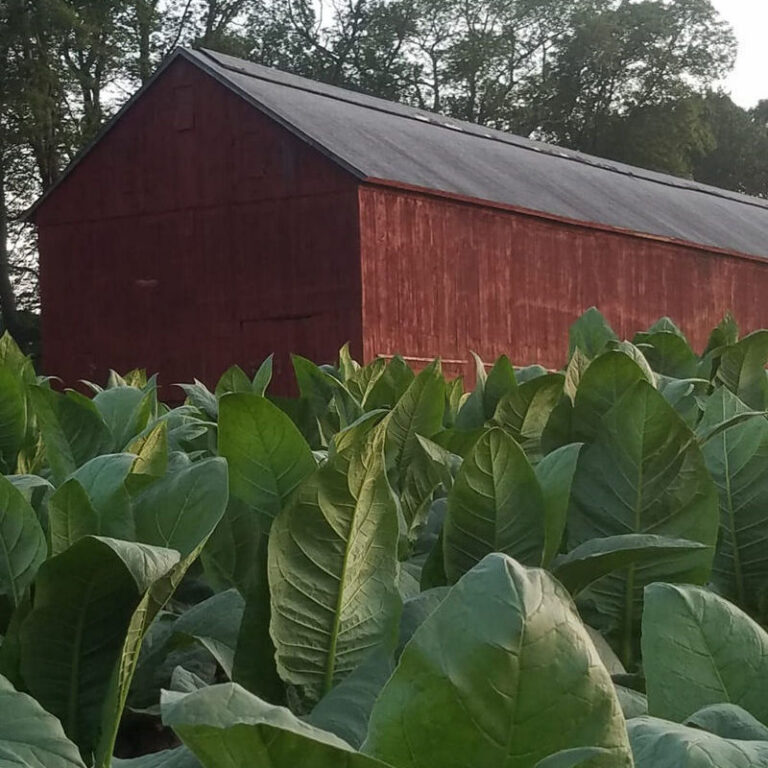
The growing season in the CT River Valley takes place between April and September. It then is hung in unique curing barns for another two to three months until the tobacco is packed in farmers’ bales and shipped in refrigerated containers to the Caribbean and Central America. As weather challenges all farmers, Connecticut is no different. Connecticut’s summer weather can bring hailstorms, micro tornadoes, insects, mold, and other diseases. If it passes through these obstacles, it faces even more challenges in curing barns and then years in fermentation.
Knowledge and know-how are crucial in every step of the journey, from seed to cigar. However, what seems simple is much more complicated than it appears. Temperature and humidity play a pivotal role from the seedbeds to the fields, fermentation, the production floor, and, finally, the humidor in tobacco shops. Any missteps in these areas can lead to the destruction of whole crops and the loss of massive investments in money and time.
The CT River Valley has profoundly impacted my life and career. I recently chose to build my new office for my company, Foundation Cigars, on a 100-acre tobacco farm in Ellington, CT. My mission over the next five years is to share the history and importance of the CT River Valley in the world of cigars and continue to help farmers in the region. The CT River Valley is as vital as the Napa Valley or any other major growing area in the world. I hope you will help me with this effort to educate more people and preserve this national treasure.
Sincerely,
Nicholas Melillo